v4.5
2D Shader
3D Shader
CreatedJan 27, 2026
UpdatedJan 27, 2026
About this shader
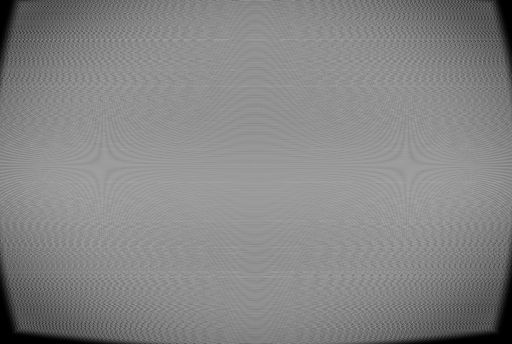
crt + vhs (CanvasItem)
test shader for godot (im learning shaders so feedback is welcome)
A full-screen retro post-process shader for Godot 4.5 / 4.6 that adds:
- CRT curvature + vignette + rounded corners
- Scanlines + optional RGB triad “shadow mask”
- VHS/VCR artifacts (chroma shift, horizontal smear, per-line jitter, tracking lines, roll bar)
- Cheap glow on bright pixels
- Simple color grading (brightness/contrast/saturation/gamma)
## How to use
1. Create a `CanvasLayer`
2. Add a `ColorRect` as a child
3. Set `ColorRect` → **Layout → Full Rect**
4. Create a `ShaderMaterial` on the `ColorRect`
5. Paste the shader into a new `Shader` resource
6. (Optional) Set `ColorRect` → **Mouse → Filter = Ignore** (so it won’t block UI input)
### UI layering tip
If you want your UI unaffected, put UI on a higher `CanvasLayer` than the effect.
This shader uses `hint_screen_texture` + `SCREEN_UV`, so it processes whatever has already been drawn behind it.
## Key parameters to tweak
- CRT glass: `curvature`, `vignette`, `corner_soften`
- Scanlines/phosphor: `scanline_strength`, `scanline_density`, `mask_strength`, `mask_scale`
- VHS noise: `jitter_px`, `tape_noise`, `tape_lines`, `roll_speed`, `roll_strength`
- Color grade: `brightness`, `contrast`, `saturation`, `gamma`
- Bloom-ish: `glow_strength`, `glow_threshold`
Shader Code
shader_type canvas_item;
render_mode unshaded;

// Full-screen post-process: reads the already-rendered frame. :contentReference[oaicite:1]{index=1}
uniform sampler2D screen_texture : hint_screen_texture, repeat_disable, filter_nearest;

// --- Color controls ---
uniform float brightness : hint_range(0.0, 2.0) = 1.02;
uniform float contrast   : hint_range(0.0, 2.0) = 1.08;
uniform float saturation : hint_range(0.0, 2.0) = 1.10;
uniform float gamma      : hint_range(0.2, 3.0) = 1.05;

// --- CRT geometry / lens ---
uniform float curvature     : hint_range(0.0, 0.40) = 0.14;
uniform float corner_soften : hint_range(0.0, 0.20) = 0.06;
uniform float vignette      : hint_range(0.0, 1.00) = 0.38;

// --- Scanlines / phosphor ---
uniform float scanline_strength : hint_range(0.0, 2.0) = 0.95;
uniform float scanline_density  : hint_range(0.5, 3.0) = 1.15; // 1.0 = native-ish
uniform float interlace_strength: hint_range(0.0, 1.0) = 0.20;

// Shadow mask (RGB triads). Turn down if you hate the “screen door”.
uniform float mask_strength : hint_range(0.0, 1.0) = 0.22;
uniform float mask_scale    : hint_range(0.5, 4.0) = 1.0; // bigger = chunkier triads

// --- VHS/VCR artifacts ---
uniform float chroma_offset_px : hint_range(0.0, 6.0) = 1.6; // RGB split in pixels
uniform float luma_smear_px    : hint_range(0.0, 8.0) = 2.2; // horizontal smear
uniform float jitter_px        : hint_range(0.0, 8.0) = 1.8; // per-line horizontal jitter
uniform float wobble_px        : hint_range(0.0, 10.0) = 1.5; // slow wave wobble

uniform float tape_noise       : hint_range(0.0, 1.0) = 0.22; // grain + specks
uniform float tape_lines       : hint_range(0.0, 1.0) = 0.35; // horizontal “tracking” lines

uniform float roll_speed       : hint_range(0.0, 1.5) = 0.10; // vertical roll bar speed
uniform float roll_strength    : hint_range(0.0, 0.6) = 0.15; // roll bar intensity

// --- Bloom-ish glow (cheap) ---
uniform float glow_strength  : hint_range(0.0, 2.0) = 0.25;
uniform float glow_threshold : hint_range(0.0, 1.0) = 0.65;

// TIME is a built-in global in CanvasItem shaders. :contentReference[oaicite:2]{index=2}
float hash11(float n) {
	return fract(sin(n) * 43758.5453123);
}

float hash12(vec2 p) {
	return fract(sin(dot(p, vec2(127.1, 311.7))) * 43758.5453123);
}

vec2 crt_curve(vec2 uv, float k) {
	// Barrel distortion style curve.
	vec2 cc = uv * 2.0 - 1.0;
	vec2 d  = cc * cc;
	cc *= 1.0 + k * vec2(d.y, d.x);
	return cc * 0.5 + 0.5;
}

float inside01(vec2 uv) {
	// 1.0 if uv in [0..1], else 0.0
	return step(0.0, uv.x) * step(uv.x, 1.0) * step(0.0, uv.y) * step(uv.y, 1.0);
}

vec3 apply_color_controls(vec3 c) {
	// brightness
	c *= brightness;

	// contrast around 0.5
	c = mix(vec3(0.5), c, contrast);

	// saturation
	float l = dot(c, vec3(0.2126, 0.7152, 0.0722));
	c = mix(vec3(l), c, saturation);

	// gamma-ish
	c = pow(max(c, vec3(0.0)), vec3(1.0 / max(gamma, 0.0001)));
	return c;
}

vec3 triad_mask(vec2 frag_xy) {
	// Simple RGB triad mask across X.
	float x = floor(frag_xy.x / max(mask_scale, 0.0001));
	float m = mod(x, 3.0);
	// Slightly tinted triads
	if (m < 1.0) return vec3(1.10, 0.85, 0.85);
	if (m < 2.0) return vec3(0.85, 1.10, 0.85);
	return vec3(0.85, 0.85, 1.10);
}

vec3 sample_screen(vec2 uv) {
	// Use textureLod at LOD 0 like the docs show. :contentReference[oaicite:3]{index=3}
	return textureLod(screen_texture, uv, 0.0).rgb;
}

void fragment() {
	vec2 px   = SCREEN_PIXEL_SIZE;
	vec2 res  = 1.0 / px;
	float t   = TIME;

	// Start from screen UV
	vec2 uv = SCREEN_UV;

	// --- VHS line jitter (per scanline) ---
	float y_line = floor(uv.y * res.y);
	float jitter = (hash11(y_line + floor(t * 15.0) * 37.0) - 0.5) * 2.0;
	uv.x += jitter * (jitter_px * px.x);

	// Slow wobble
	uv.x += sin(uv.y * 8.0 + t * 1.2) * (wobble_px * px.x);

	// CRT curve
	vec2 cuv = crt_curve(uv, curvature);
	float in_bounds = inside01(cuv);

	// Rounded corners (soft clip)
vec2 d = abs(cuv - 0.5) * 2.0;      // 0 at center, ~1 at edges
float edge = max(d.x, d.y);

// 1 in center, fades to 0 near edges
float corner_mask = 1.0 - smoothstep(1.0 - corner_soften, 1.0, edge);


	// --- Chromatic aberration / VHS chroma shift ---
	vec2 chroma = vec2(chroma_offset_px * px.x, 0.0);
	float r = sample_screen(cuv + chroma).r;
	float g = sample_screen(cuv).g;
	float b = sample_screen(cuv - chroma).b;
	vec3 col = vec3(r, g, b);

	// --- Luma smear (horizontal) ---
	float smear = luma_smear_px * px.x;
	vec3 s1 = sample_screen(cuv + vec2(smear, 0.0));
	vec3 s2 = sample_screen(cuv - vec2(smear, 0.0));
	col = mix(col, (col + s1 + s2) / 3.0, 0.35);

	// --- Scanlines ---
	float scan = sin((cuv.y * res.y) * 3.14159 * scanline_density);
	float scan_mul = 1.0 - scanline_strength * (0.5 - 0.5 * scan); // darker troughs
	col *= scan_mul;

	// --- Interlacing (alternate rows “flicker”) ---
	float field = mod(floor(FRAGCOORD.y) + floor(t * 60.0), 2.0);
	col *= 1.0 - interlace_strength * field * 0.10;

	// --- Rolling tracking bar ---
	float roll_y = fract(t * max(roll_speed, 0.0001));
	float dist = abs(cuv.y - roll_y);
	float bar = smoothstep(0.20, 0.0, dist); // wide soft bar
	col += bar * roll_strength * vec3(0.12, 0.12, 0.12);

	// --- Tape lines (random horizontal streaks) ---
	float line_n = hash11(y_line * 0.7 + floor(t * 12.0) * 11.0);
	float line = smoothstep(0.985, 1.0, line_n) * tape_lines;
	col += line * vec3(0.18, 0.18, 0.18);

	// --- Grain / specks ---
	float n = hash12(FRAGCOORD.xy + vec2(t * 120.0, t * 90.0));
	float grain = (n - 0.5) * 2.0;
	col += grain * (tape_noise * 0.06);

	// Occasional white specks
	float speck = smoothstep(0.995, 1.0, hash12(FRAGCOORD.xy * 0.73 + t * 40.0));
	col += speck * (tape_noise * 0.25);

	// --- Cheap glow (cross blur on brights) ---
	vec3 c0 = col;
	vec3 cx1 = sample_screen(cuv + vec2(px.x, 0.0));
	vec3 cx2 = sample_screen(cuv - vec2(px.x, 0.0));
	vec3 cy1 = sample_screen(cuv + vec2(0.0, px.y));
	vec3 cy2 = sample_screen(cuv - vec2(0.0, px.y));
	vec3 blur = (c0 + cx1 + cx2 + cy1 + cy2) / 5.0;
	float br = dot(blur, vec3(0.2126, 0.7152, 0.0722));
	vec3 glow = max(blur - vec3(glow_threshold), vec3(0.0));
	col += glow * glow_strength * (0.5 + 0.5 * br);

	// --- Vignette ---
	vec2 v = cuv - 0.5;
	float vig = smoothstep(0.9, 0.2, dot(v, v) * 2.2);
	col *= mix(1.0 - vignette, 1.0, vig);

	// --- Shadow mask triads ---
	vec3 mask = triad_mask(FRAGCOORD.xy);
	col *= mix(vec3(1.0), mask, mask_strength);

	// Color grading last
	col = apply_color_controls(col);

	// Apply bounds + rounded corners (outside = black)
	col *= in_bounds * corner_mask;

	COLOR = vec4(col, 1.0);
}
Live Shader Preview
This feature is currently in beta.
Keep exploring
Related shaders
More community shaders with similar tags and compatibility.
Community Discussion
0Join the discussion! Log in to share your thoughts.
Log In to Comment